- An illustration or plate inserted immediately in front of the title page, with the illustration facing the title page, often abbreviated as frontis.[1]
- An illustration that appears facing a book’s title page. When a book is open to the title page, the frontispiece appears on the left and the title page on the right. The illustration can be purely decorative or informative, or a combination of both.[2]
I love learning new words, always have, always will. I’m a writer, and, like any craft, constantly learning is how you improve, how you come up with new ideas, how you continue to evolve in your art. Recently, I learned the word frontispiece, and I fell in love with it. There’s something very satisfying about the way it rolls off the tongue, just like there’s something very satisfying about a book with a good frontispiece. After letting this word roll around in my brain for a bit, I started to wonder, “What does the frontispiece of my writing journey look like?”
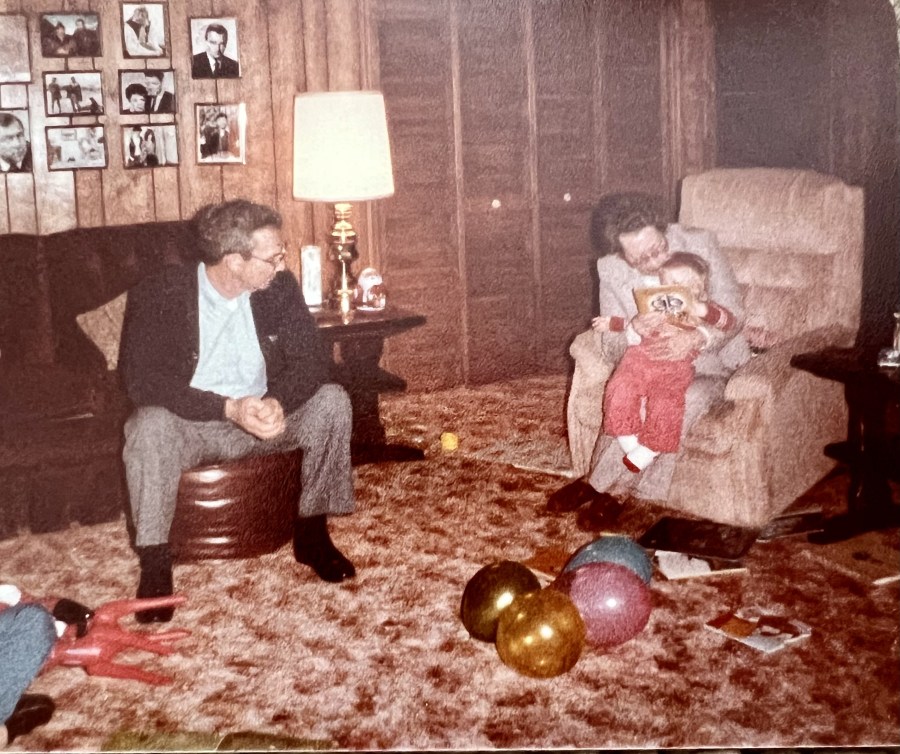
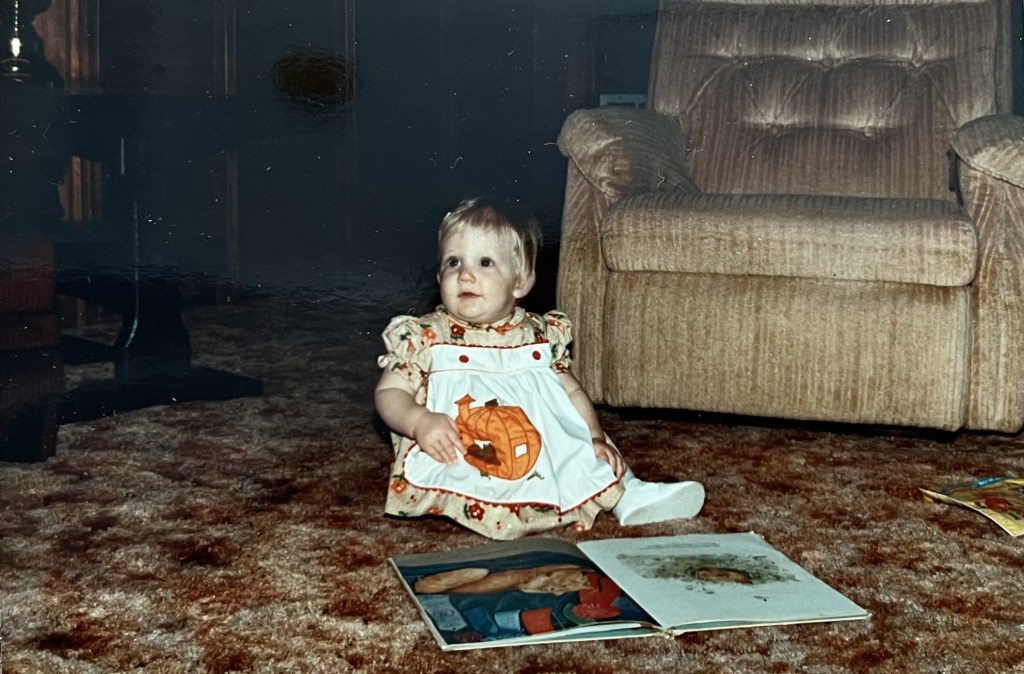
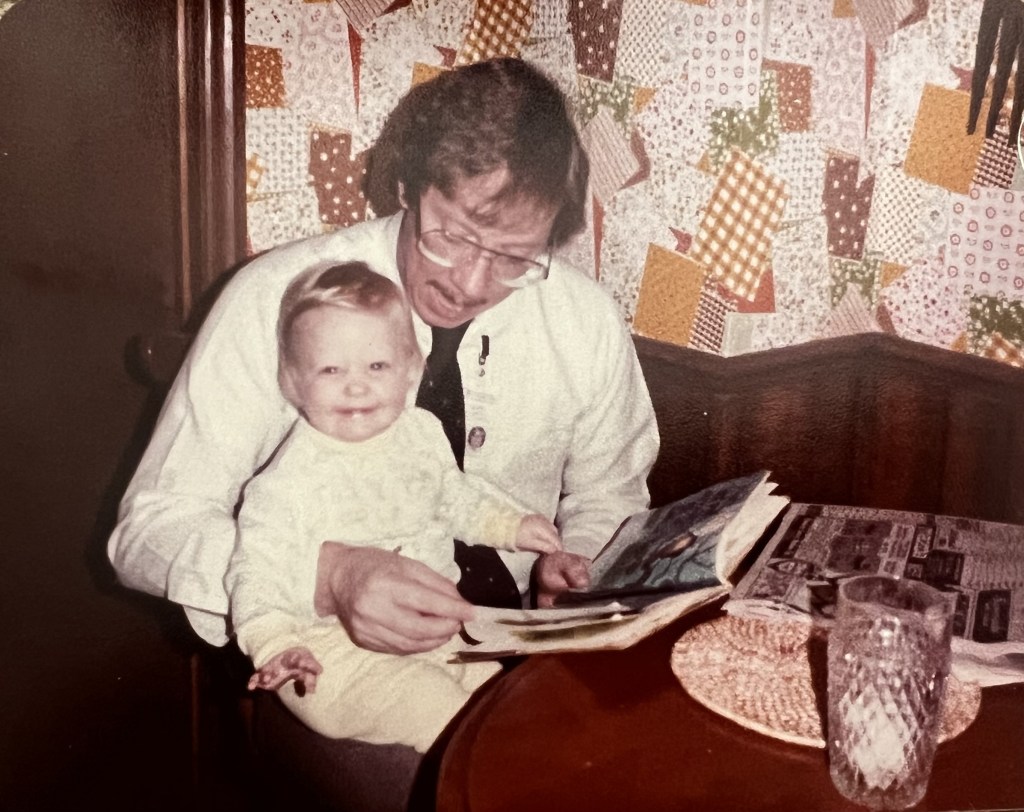
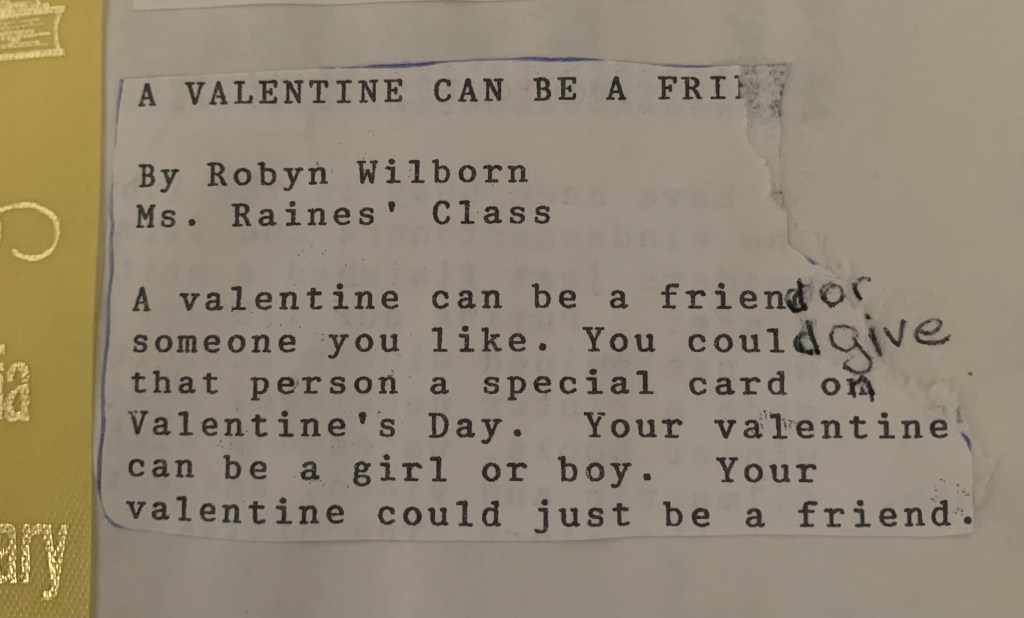
To answer this question, we have to go back in time. I’ve always been a writer, but I haven’t always seen myself as a writer—and those are two very different things. As a child I was always reading and writing. I wrote poems and stories, sometimes even “publishing” them (i.e., typing them up on my mom’s typewriter). I wrote and published a weekly neighborhood update newsletter that I would piece together, copy, and distribute to my lovely neighbors who indulged me in this venture. When I was 12 years old, I wrote the Christmas play for our church. I’ve kept a journal for as long as I can remember.
When I was a college sophomore who had yet to declare a major, my World Lit professor read my essays and told me I should consider majoring in English. I wrote her off at the time, thinking that the only job I would get as an English major was teaching, which was not what I wanted to do. But I also didn’t know what I wanted to do, so I took a break from school. During that break, I could not get my World Lit professor’s words out of my head. When I decided to go back to school, the university had split the English major into two concentrations: literature, which was designed for those who wanted to teach, and professional writing, which was designed for people like me. So I majored in English with a professional writing concentration.
The professional writing concentration allowed me to learn about many different kinds of writing—we explored journalism, grant writing, marketing and advertising, business writing—but it left little room for my creative side. I graduated with a BA in English, Professional Writing Concentration, but I still didn’t see myself as a writer. I went on to grad school where I earned a master’s degree in Technical and Professional Communication. After grad school, I landed a job as a Technical Writer, where I would spend the next 11 or so years. Yet, I still didn’t see myself as a writer.
I was writing, yes, but for me, I wasn’t a writer. I started the MFA in Creative Nonfiction program at Bay Path a little over a year ago, and what I’ve realized is that I didn’t see myself as a writer because I was turning off my creativity. I was writing user manuals and release notes when I wanted to be writing stories. I was turning off the part of my brain that had something to say. I’ve always had the means to tell my story; I just didn’t realize I could.
In my early 20s, someone told me I had nothing interesting to say, and I believed him. I realize now that he was wrong. Being in this program has shown me that others do not share his opinion—they want to hear my story. And the only person who can tell my story is me. No one knows it like I do.
All those years of self-doubt, questioning, and turning off my creativity, that is my frontispiece. That is where my writer’s path begins.
[1] https://www.abaa.org/glossary/entry/frontispiece
[2] https://www.amphilsoc.org/blog/whats-happening-frontispiece-and-what-exactly-frontispiece
 Robyn Weaver